

Fernando de Noronha Brazil: Complete Travel Guide, Best Time & How to Get There
Have you ever thought about exploring one of the most authentic and fascinating sides of Brazil? In Fernando de Noronha, nature reveals itself in unforgettable encounters, stunning landscapes, and experiences that combine adventure, beauty, and comfort for an unforgettable journey.
Summary
Fernando de Noronha Travel Guide | How to Get There | Best Time to Visit | Top Beaches and Activities
Fernando de Noronha, Brazil, is one of the most preserved and exclusive destinations in the country. Known for its clear waters, protected marine life, and strict environmental policies, the archipelago is ideal for travelers seeking untouched nature and high-quality ecotourism experiences. This guide brings a complete, SEO-focused overview for planning your trip, including how to get there, the best time to visit, what to do, and essential travel requirements.
Where Is Fernando de Noronha?
Fernando de Noronha is a volcanic archipelago located about 350 kilometers off the northeastern coast of Brazil. It belongs to the state of Pernambuco and is recognized by UNESCO as a World Heritage Site due to its ecological importance. The island is reachable only by air or authorized boats, keeping tourism limited and controlled throughout the year.
Main airports with direct flights:
Recife (PE)
Natal (RN)
Average flight duration: approximately one hour.
Best Time to Visit Fernando de Noronha
Search interest for “best time to visit Fernando de Noronha” is high because the climate varies according to the traveler’s goals.
Dry Season (August to February)
The most recommended period for first-time visitors.
Calm seas
Better visibility for snorkeling and diving
Consistently sunny days
Rainy Season (March to July)
More suitable for surfers.
Strong swells at Cacimba do Padre
Ideal waves for professional surfing competitions
Regardless of the month, temperatures range from 26°C to 30°C, and the sea remains warm year-round.
How to Get to Fernando de Noronha (How to Go to Fernando de Noronha)
Due to its protected ecosystem, Fernando de Noronha requires visitors to follow specific entry procedures:
Environmental Preservation Tax (TPA)
Charged per day of stay.
It must be paid online or upon arrival.
National Marine Park Fee
Mandatory for access to protected beaches such as Baía do Sancho and Atalaia.
Valid for ten days from the date of purchase.
Both receipts must be kept available, as they are required at park entry checkpoints.
Travelers should book flights and hotels well in advance due to the island’s strict limit on daily visitors.
Top Beaches in Fernando de Noronha
Fernando de Noronha consistently appears among the top beach destinations in global rankings. Each beach offers unique attractions:
Baía do Sancho
Repeatedly voted one of the best beaches in the world. Crystal-clear water and rich marine life.
Baía dos Porcos
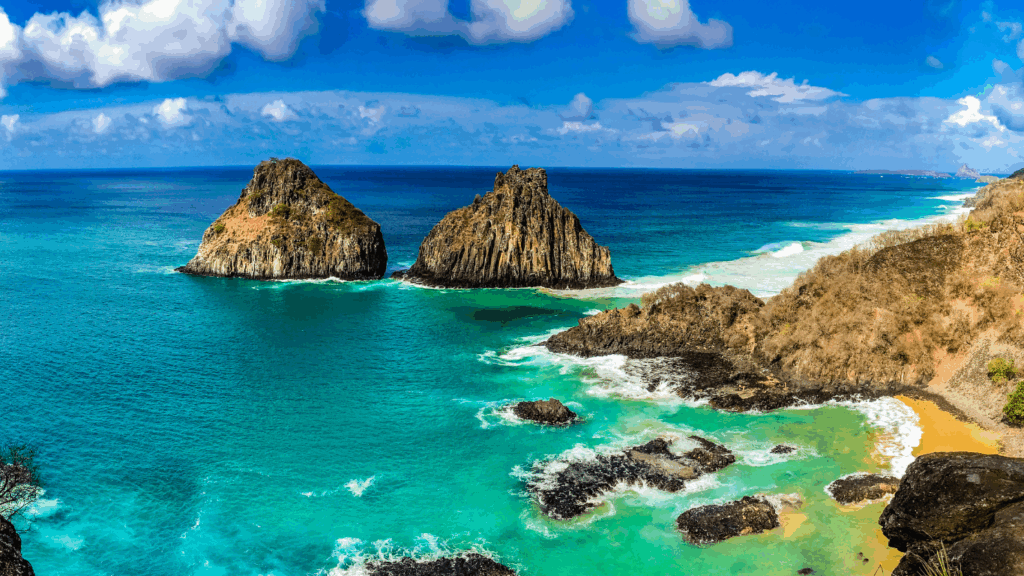
Famous for natural tidal pools and panoramic views of Morro Dois Irmãos.
Praia do Leão
One of the largest and most preserved beaches, known for sea turtle nesting.
Cacimba do Padre
Home to strong waves and popular during surf season.
Praia do Atalaia
Tidal pools with controlled access for ecological preservation.
Many locations have limited visiting hours and require prior booking through the local environmental authority.
Activities and Things to Do
Fernando de Noronha is one of the top destinations in Brazil for nature and outdoor activities.
Snorkeling and Diving
Visibility can reach up to 50 meters. Divers encounter turtles, rays, reef sharks and large schools of fish.
Boat Tours
The coastline is best explored from the sea, including Dolphin Bay, where spinner dolphins gather at sunrise.
Hiking Trails
Several trails lead to viewpoints and hidden beaches, such as the trail to Baía do Sancho and the Fortaleza Trail.
Surfing
Ideal conditions occur between December and March.
Sunset Observation
Forte do Boldró is one of the most popular locations for panoramic sunset views.
Where to Stay
Due to the island’s strict visitor limitation, accommodation options are limited but curated.
Eco-friendly Guesthouses (Pousadas)
Focus on sustainability and low environmental impact.
Luxury Boutique Hotels
High-end services, ocean views, and exclusive experiences.
Budget Accommodations
Simpler options for travelers seeking practicality.
Advance reservations are strongly recommended, especially during Brazilian holidays or the dry season.
Sustainable Travel and Local Culture
Fernando de Noronha is a global benchmark for sustainable tourism.
Key environmental rules include:
Ban on plastic packaging
Strict waste management
Controlled access to beaches and trails
Mandatory use of reef-safe sunscreen
Supporting local businesses, guides, and artisans is encouraged to strengthen the island’s economy and preserve cultural identity.
Local Cuisine and Dining
Fernando de Noronha’s cuisine features fresh fish, tropical fruits, and regional preparations.
Highlights include:
Grilled fish with local spices
Lobster with passion fruit sauce
Baião de Dois (traditional mix of rice, beans, and cheese)
Tapioca-based dishes
Well-known restaurants:
Mergulhão
Xica da Silva
Dining often combines high-quality gastronomy with scenic ocean views.
Nightlife and Cultural Experiences
Although the island is known for its tranquility, evenings offer a relaxed cultural environment:
Bars with live Brazilian music
Sunset gatherings
Occasional forró dance nights
Stargazing due to minimal light pollution
Nightlife is informal and nature-oriented.
Conclusion
Fernando de Noronha is one of Brazil’s top ecotourism destinations. Its preserved environment, controlled visitor access, and combination of adventure and tranquility make it a unique location for travelers seeking a high-quality, nature-focused trip. This Fernando de Noronha travel guide provides essential information on how to get there, the best time to visit, where to stay, and what to do, helping travelers plan a complete and sustainable experience.
To discover exclusive travel packages in Brazil, see below: